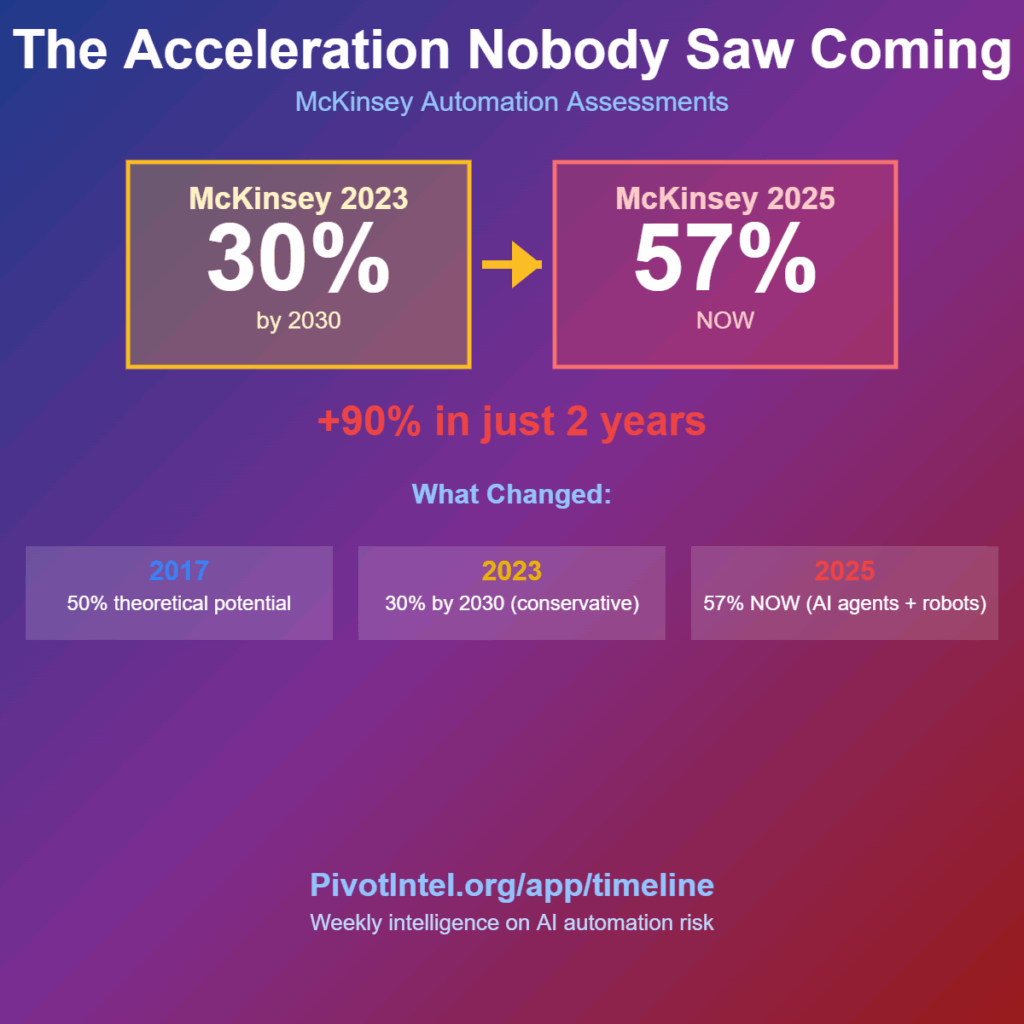
By the time these facilities are complete, AI will have evolved through 8–16 generations.
February 8, 2026
BLUF (Bottom Line Up Front): Communities across Michigan told data centers would support “AI research for medicine and climate science” are discovering actual purpose: nuclear weapons development. Meanwhile, organizing tactics from Kansas City, Wisconsin, and Delaware show communities can fight back effectively. And win. Six states now have moratorium legislation. This is a national pattern, and communities have tools to respond.
What Communities Were Told vs. What’s Actually Happening
Los Alamos Confirms: Ypsilanti Data Center for Nuclear Stockpile Research
University of Michigan and Los Alamos National Laboratory’s $1.2 billion Ypsilanti Township data center has a problem: the public just found out what it’s actually for.
What U of M told communities: “High-performance computing facility” supporting “important research in medicine, climate science, energy, and national security.” The university emphasized it will not “manufacture” nuclear weapons.
What Los Alamos confirmed on the record: Deputy Laboratory Director Patrick Fitch told the Michigan Daily that one of two planned computers “will be for what’s called secret restricted data. So it’ll be for the nuclear weapons program.”
The facility will support plutonium pit development for the W87-1 warhead. The first new nuclear warhead manufactured since the Cold War ended. High-performance computing is essential for simulating warhead detonation, ballistic missile flight paths, and defeating antiballistic missile systems.
Context matters: 84% of Los Alamos’s 2026 budget goes to nuclear weapons work, according to Nuclear Watch New Mexico. The data center requires 15 times Los Alamos’s entire annual science research budget. This is not a research facility that happens to include some national security work. This is a nuclear weapons facility that U of M is building on behalf of the federal government.
The scale of public investment:
- $1.2 billion total cost
- $100 million state grant (Michigan taxpayers)
- 144.5 acres
- 3.6 million gallons of water per day
- Power equivalent to 90,000 homes
- U of M is exempt from property taxes but requires township police and fire services
Community response working:
- Construction delayed one year
- Site relocated away from South Hydro Park
- Ypsilanti City Council unanimously opposed
- State Rep. Jimmie Wilson Jr. (D-Ypsilanti) introduced legislation to rescind the $100 million grant
- 700+ U of M employees, faculty, and students signed petition against project
- Township Supervisor Brenda Stumbo: “I do not trust U of M”
This is the deception pattern in action: vague promises about “economic development” and “cutting-edge research,” NDAs preventing public scrutiny, then communities discover the actual purpose after deals are signed.
Michigan Intelligence: Organizing Forcing Response
Van Buren Township / Project Cannoli
Panattoni’s proposed 1-gigawatt data center in Van Buren Township (near Detroit) demonstrates that community organizing works – even before projects are approved.
Project scale:
- 1 gigawatt electricity consumption
- 2-3.6 million gallons water/day
- Located in industrially-zoned area near I-94
Organizing success: Township Supervisor Kevin McNamara admitted that 200+ residents at protests forced officials to “pump the brakes.” His exact words: “It caused us to really pump the brakes when all of a sudden we had 200 people screaming, ‘no data centers, we’re all going to die.'”
Next action: Planning commission meeting February 11, 2026. If you’re in the area, show up.
Statewide Organizing Wave
Michigan is seeing coordinated resistance:
- Sierra Club launched statewide moratorium petition
- Bridge Michigan reports data center moratoriums “piling up” across the state
- Gubernatorial candidates being forced to take positions on data center development
- OpenAI/Saline project advancing despite opposition (environmental approvals granted)
The pattern: scattered township resistance is evolving into state-level organizing. Communities are sharing tactics, building coalitions, and forcing state-level policy response.
National Organizing Toolkit: Tactics That Worked
Communities don’t need to reinvent the wheel. Here’s what’s working across the country:
Kansas City: Zoning Changes (January 2026)
What they did: Organized “thousands of emails” to City Council demanding data center-specific regulations.
What they won: Unanimous City Council vote (January 15) creating first major restrictions on data centers:
- Reclassified data centers from “commercial” to “industrial” facilities
- Ended “by-right” building in most districts
- Now requires: special permits + City Council approval + public feedback
- Mandates “will-serve letters” from Kansas City Water and Evergy proving infrastructure capacity
Why it matters: City Manager Mario Vasquez: “We seem to be at the cutting edge of regulation when it comes to this topic.” Other city managers across the U.S. are requesting copies of Kansas City’s ordinance.
Replicability: High. This is municipal zoning code language that can be adapted to any community.
Wisconsin: Transparency Laws (January 2026)
What they exposed: Wisconsin Watch investigation documented that at least four communities signed nondisclosure agreements (NDAs) with data center developers, keeping billion-dollar projects secret for over a year.
Pattern discovered:
- Beaver Dam: Meta used shell companies, kept project hidden for over a year
- Menomonie: Signed NDA February 2024, didn’t announce $1.6 billion project until July 2025
- Officials changed zoning ordinances in secret to accommodate data centers
- Similar patterns in Minnesota (years of secrecy), Virginia (25 of 31 projects had NDAs)
Legislative response: State Rep. Clint Moses (R-Menomonie) introduced bill to ban data center NDAs statewide. His quote: “I’ve never seen such overwhelming opposition from all sides of the aisle.”
Community victory: Menomonie mayor put $1.6 billion project “on hold” after community pressure.
Replicability: High. Public records requests + investigative journalism + bipartisan coalition = policy change.
Delaware: Rate Protection + Environmental Enforcement (February 2026)
Legislative approach (advancing now):
- HB 233 (Rep. Frank Burns): Requires separate utility rates for data centers, prevents costs from shifting to residential customers
- SB 205 (Sen. Stephanie Hansen): Requires “certificates to operate” from state regulators, can mandate grid modernization payments
Why it matters: Five proposed Delaware data centers would require 2,000+ megawatts; nearly doubling the state’s electricity usage. Without rate protection, residents would pay for infrastructure upgrades.
Enforcement victory: Delaware Department of Natural Resources and Environmental Control (DNREC) blocked “Project Washington” data center using the state’s 1971 Coastal Zone Act. The proposed facility required 516 backup diesel generators and 2.5 million gallons of stored diesel fuel, deemed “entirely unprecedented” and violating environmental law.
Sierra Club Delaware Director Dustyn Thompson: “Monumental win for the environment.”
Replicability: Medium-to-high. Requires existing environmental laws (Coastal Zone Acts, air quality standards) and regulatory enforcement, but shows that environmental laws can block data centers if enforced.
Policy Wave: Six States, Bipartisan Pattern
Data center regulation is becoming a 2026 legislative trend, with states acting while the federal government remains absent.
New York: 3-Year Moratorium (Introduced February 6)
Bill: S.9144 (Sen. Liz Krueger, Assemblymember Anna Kelles) Coalition: Food & Water Watch, NYC Democratic Socialists of America, Alliance for a Green Economy Key data:
- NY residential electric rates: +43% (2020-2025)
- National household rates: +13% in 2025 alone
- Bloomberg analysis: 70% of places with rising rates are within 50 miles of significant data center activity
- NY interconnection queue: 6,800 MW (September 2025) → 12,000 MW (January 2026) = 76% increase in 4 months
This is the acceleration gap made explicit: demand is growing faster than any regulatory framework can respond.
Six-State Pattern
New York joins Georgia, Maryland, Oklahoma, Vermont, and Virginia in introducing moratorium legislation. The pattern is bipartisan:
- Oklahoma: Republican state senator proposing moratorium through late 2029
- Florida: Republican Governor DeSantis “pushing for AI regulation amid federal inaction”
- New York: Democratic legislators leading with Sierra Club support
States are acting because the federal government isn’t. Communities are forcing state action because local governments lack authority.
Additional State Action
- Georgia: Public Service Commission created ratepayer protection rules, legislators codifying into law
- Oregon: Created separate rate structure for data centers with long-term contracts
- Maryland: Utility regulator weighing new rate structure, preapproval requirements for large load users
The shift: From “economic development at any cost” to “protect ratepayers first, then evaluate projects.”
Extraction Pattern: What Developers Don’t Want You to Know
South Carolina: Approved During Winter Storm
Google’s $2 billion data center was “quietly approved” by a rural South Carolina county during a winter storm when public attention was diverted. This is not coincidence. It’s tactic.
Louisiana: Federal Agents at Meta Site
Federal agents showed up at Meta’s $27 billion Louisiana data center site. Context unclear from available reporting, but the pattern is worth noting: major projects attracting federal law enforcement attention.
Nvidia CEO: “7-8 Year Buildout” for Tech Evolving Every 6-12 Months
Nvidia CEO Jensen Huang told CNBC (February 6) that “massive AI CapEx is appropriate and necessary” and the “AI build-out will take 7-8 years.”
Think about what he’s asking: Communities should commit to 7-8 years of construction for technology that evolves every 6-12 months. By the time these facilities are complete, AI will have evolved through 8-16 generations. Communities will be locked into 25-30 year tax commitments for infrastructure that’s obsolete before it opens.
Meanwhile: Federal Reserve Vice Chair Philip Jefferson admitted the same day that “job creation has been weaker than we’d like,” confirming data showing 658,000 fewer job openings than expected.
The pattern: The company selling the GPUs says “keep spending.” The Fed says jobs are weak. Workers are displaced. Communities pay billions in subsidies. And Nvidia profits from every deal.
Organizing Toolkit: Quick Reference Checklist
PROACTIVE DEFENSE – ACT BEFORE PROPOSALS ARRIVE
Review your zoning code NOW:
- Are data centers classified as “commercial,” “warehousing,” or “communications service”? These allow by-right building.
- Kansas City found them under “communications service” (like radio stations)
- Wisconsin found them under “warehousing”
- Create data center-specific zoning category with specific regulations
Close the loopholes before developers arrive:
- Ban NDAs: Pass ordinance prohibiting officials from signing data center NDAs
- Require environmental impact statements BEFORE zoning approvals
- Set utility capacity thresholds: Require proof from utilities BEFORE permitting
- Establish baseline: Document current utility rates, water usage, grid capacity
- Build coalition now: Municipal utilities + Sierra Club + ratepayer advocates + planning commissioners
Track adjacent communities: Monitor what’s happening in neighboring townships. Developers target regions, not isolated communities.
KANSAS CITY MODEL – Zoning Changes
- Organize email campaign to city council (aim for “thousands”)
- Reclassify data centers from commercial to industrial
- End “by-right” building permits
- Require: special permits + council approval + utility “will-serve letters”
- Contact Kansas City for copy of ordinance language
WISCONSIN MODEL – Transparency Laws
- File public records requests for any NDAs between officials and developers
- Contact investigative journalists (Wisconsin Watch model)
- Push for state legislation banning data center NDAs
- Expose shell companies and secret zoning changes
- Emphasize bipartisan opposition to secrecy
DELAWARE MODEL – Rate Protection
- Demand separate utility rates for data centers
- Require “certificates to operate” from state regulators
- Use existing environmental laws (Coastal Zone Acts, air quality, diesel storage)
- Require grid modernization payments from developers, not ratepayers
- Coalition: Municipal utilities + Sierra Club + residential advocates
GENERAL TACTICS
- Attend every planning commission/city council meeting
- Document what developers promise vs. what’s in contracts
- Organize petition drives (Michigan Sierra Club model)
- Demand public hearings, not “open houses” with poster boards
- Connect with organizing groups in other communities
- Push gubernatorial/state rep candidates to take positions
KNOW YOUR VULNERABILITIES
- Shell companies hide developer identity until deals signed
- Winter storm/holiday approvals when public attention low
- “Economic development” NDAs signed before public knows
- Tax exemptions (universities, some developers exempt from property taxes)
- Speed: announcement to approval can be <6 months
Warning Signs: Detect Proposals Before Public Announcement
By the time it’s announced, deals are often nearly finalized. Early detection gives you leverage.
LAND & DEVELOPMENT INDICATORS:
- Shell company/LLC purchases large industrial/agricultural land (50+ acres)
- Multiple adjacent parcels purchased by same unknown entity
- Land purchased at above-market rates with quick closings
- Zoning variance requests for “warehousing,” “data processing,” or vague “technology”
- Requests to annex township land into municipality (DeForest, WI annexed 1,600 acres)
UTILITY RED FLAGS:
- Major electrical infrastructure upgrades without clear justification
- Utility requesting rate increases to “modernize grid”
- New substations planned in areas without corresponding growth
- Water treatment plant expansions exceeding local projections
- Will-serve letters requested for unusually large loads (20+ MW, millions of gallons/day)
GOVERNMENT BEHAVIOR:
- Closed-door meetings with “economic development consultants”
- NDAs signed without public disclosure (requires public records requests)
- Sudden zoning ordinance changes defining “warehousing” to include data centers
- Economic development trips to Silicon Valley, Northern Virginia (data center hubs)
- Officials deflecting questions or refusing to discuss “pending negotiations”
DEVELOPER TACTICS:
- Project code names in public documents (“Project Cannoli,” “Project Washington,” “Project Red Wolf”)
- Developer representatives meeting with multiple adjacent communities simultaneously
- Tax incentive applications filed under vague descriptions
- Environmental assessments for “future development” without specifics
HOW TO MONITOR:
- Set Google Alerts: Your county/township + “data center,” “economic development,” “zoning change”
- Attend planning commission meetings even when agenda looks routine
- File quarterly public records requests: All NDAs, economic development correspondence, utility load requests
- Monitor property records: Large land transfers, particularly to LLCs
- Track utility commission filings: Rate cases, infrastructure plans
- Connect with reporters: Local journalists often hear rumors before announcements
- Join regional organizing networks: Other communities share intelligence
WHAT TO DO WHEN YOU SPOT WARNING SIGNS:
- Don’t wait for confirmation—start organizing immediately
- File public records requests for all related documents
- Contact investigative journalists (Wisconsin Watch model)
- Reach out to communities fighting data centers for tactical support
- Review and strengthen zoning codes before proposal becomes public
- Build coalition with utilities, environmental groups, ratepayer advocates
- Demand transparency from officials about any “economic development” discussions
Remember: By the time it’s announced, developers have often been negotiating in secret for months or years. Early detection = stronger position.
Bottom Line
Communities told data centers would support “medicine and climate science” are discovering actual purpose: nuclear weapons research. This is not an isolated incident. This is the pattern: vague promises, secret negotiations, then communities discover what they’ve actually approved.
But communities are fighting back and winning:
- Kansas City changed zoning, ended by-right building
- Wisconsin exposed NDA pattern, state legislation introduced to ban them
- Delaware blocked project with environmental enforcement, advancing rate protection
- Six states have moratorium legislation
- Pattern is bipartisan: conservative and progressive governors demanding regulation
The federal government is absent. States are acting. Communities are organizing. And the tactics are spreading city-to-city, state-to-state.
You don’t need to wait until a proposal arrives. Review your zoning code now. Close the loopholes. Build your coalition. Monitor the warning signs.
The next Project Cannoli is being negotiated in secret right now. The question is whether your community will discover it in time to respond, or after the deals are signed.
Take Action
This Week:
- Van Buren Township: Planning commission meeting February 11, 2026
- Contact your state representatives: Ask if they support data center moratorium legislation
- Request ordinance copies: Contact Kansas City for zoning language, Wisconsin for NDA ban text
- Review your local zoning code: Are data centers allowed “by-right” in your community?
Ongoing:
- Join PivotIntel community intelligence network (coming to our Discord soon!)
- Share organizing tactics with adjacent communities
- File public records requests quarterly
- Attend all planning commission meetings
Resources:
- Kansas City ordinance: Contact Kansas City, MO planning department
- Wisconsin NDA ban bill: State Rep. Clint Moses office
- Delaware rate protection bills: HB 233 (Rep. Frank Burns), SB 205 (Sen. Stephanie Hansen)
- Michigan organizing: Sierra Club Michigan, Stop the Data Center coalitions
Intelligence sources and methodology
Next PivotIntel Weekly: February 15, 2026
PivotIntel provides infrastructure intelligence for communities evaluating data center proposals. We track projects, policy developments, organizing tactics, and extraction patterns across Michigan and the Great Lakes region.
Published by The Open Record L3C Subscribe: pivotintel.org Tips: angela@theopenrecord.org